
Active Recovery with Ballet: How Gentle Movement Restores Energy
There is a common misconception that rest means complete stillness. In reality, the body often responds better to gentle movement. Active recovery - particularly through ballet-inspired stretching and mobility work - can restore energy, ease muscle tension, and support flexibility without placing additional strain on the body.
For women balancing work, family, and fitness, recovery is not a luxury. It is essential. And it does not require complicated routines or specialist equipment. A small amount of focused movement at home can make a noticeable difference.

Why active recovery works
After strength training, cardio, or even a long day at your desk, muscles can feel tight and fatigued. Gentle mobility exercises encourage circulation, which helps deliver oxygen and nutrients back to working muscles. This supports repair and reduces stiffness.
Ballet stretching is particularly effective because it combines control, alignment, and breath. Rather than forcing flexibility, it encourages length through awareness and patience.
The result is not exhaustion, but renewal.
A Simple Ballet-Inspired Recovery Routine
You can complete the following sequence in 10 to 15 minutes. Move slowly. Breathe deeply. Focus on quality rather than range.

1. Supported Plié for Lower Body Release
Stand tall, holding onto the back of a chair or kitchen counter for balance.
Place heels together, toes turned slightly out.
Bend the knees gently into a small plié.
Keep the spine upright and shoulders relaxed.
Rise slowly (pictured to the left), engaging through the legs.
Repeat 8 to 10 times.
This encourages blood flow to the thighs and glutes while increasing joint mobility at the hips, knees and ankles.
2. Hamstring Lengthening at the Barre
Holding your support, step one foot slightly forward.
Keep the front leg straight but soft at the knee.
Hinge gently from the hips with a long spine.
Avoid rounding the back.
Breathe into the stretch for 20 to 30 seconds.
Switch sides.
This helps relieve tension after walking, running, or prolonged sitting.
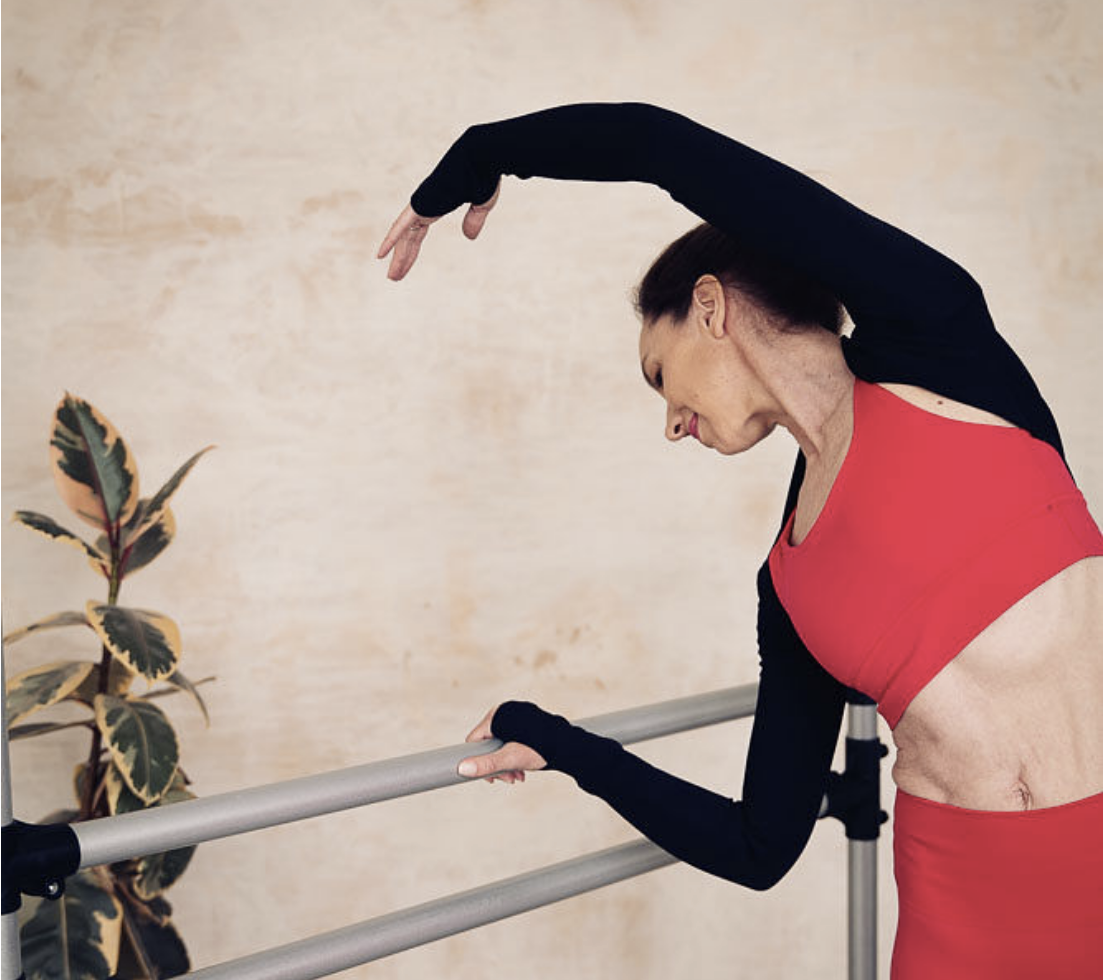
3. Port de Bras for Upper Body Release
Stand tall with arms by your sides.
Inhale and float the arms gently forward and up.
Exhale and open them wide to the side.
Lower slowly with control.
Repeat 6 to 8 times.
This simple sequence opens the chest, eases shoulder tension, and improves posture - particularly valuable after time at a desk or driving.
4. Gentle Calf and Ankle Mobility
Stand facing your support.
Step one foot back, pressing the heel towards the floor.
Keep the back leg straight.
Hold for 20 seconds.
Bend the back knee slightly to target the lower calf.
Switch sides.
Healthy ankles and calves support balance and reduce stiffness in everyday movement.

5. Seated Forward Fold with Breath
Sit comfortably on the floor or on a chair.
Lengthen the spine.
Hinge forward gently from the hips.
Rest hands wherever they reach comfortably.
Take five slow breaths.
This encourages the nervous system to shift from stress to calm.
Energy Renewal Through Gentle Movement
What often surprises women is how energising gentle movement can feel. Active recovery reduces heaviness, improves circulation, and supports mobility without draining reserves. Instead of feeling depleted, you finish feeling steadier and clearer.
Ballet-inspired recovery also reinforces mindful movement. It is an opportunity to check in, rather than push through. Over time, this approach builds sustainability into your fitness routine.
Strength is not only built in high intensity sessions. It is supported by the quieter moments of care in between.
If you want longevity in your training (and in your energy) recovery deserves just as much attention as effort.