
4 Exercises to Relieve Lower Back Pain (No Equipment Needed)
Lower back discomfort is incredibly common, particularly if you spend much of your day sitting.
Long hours at a desk, driving, reduced movement, and general stiffness can all leave the lower back feeling tight and uncomfortable. Weakness through the glutes and core can also contribute to how supported your back feels during everyday movement.
When your back is sore, the instinct can be to stop moving altogether. But for many types of everyday muscular back discomfort, gentle movement can be more helpful than prolonged rest.
The key word here is gentle.
You do not need an intense workout or specialist equipment. These four simple exercises can be done at home and focus on mobility, strength, and releasing tension.
1. Cat Cow
Cat cow is a gentle way to introduce movement through the spine, particularly after you have been sitting for a long time.
How to do it

Start on your hands and knees, with your hands underneath your shoulders and your knees underneath your hips.
Take a slow breath in and gently allow your chest to move forwards as your spine comfortably extends.
As you breathe out, gently round your back towards the ceiling and allow your head to relax.
Continue moving slowly between the two positions.
Try 6 to 10 repetitions.
Why it can help
Rather than holding one deep stretch, cat cow encourages the spine to move gradually through a comfortable range.
It can be particularly pleasant first thing in the morning or after several hours at a desk.
Do not force either position. Think about creating smooth movement rather than trying to stretch as far as possible.
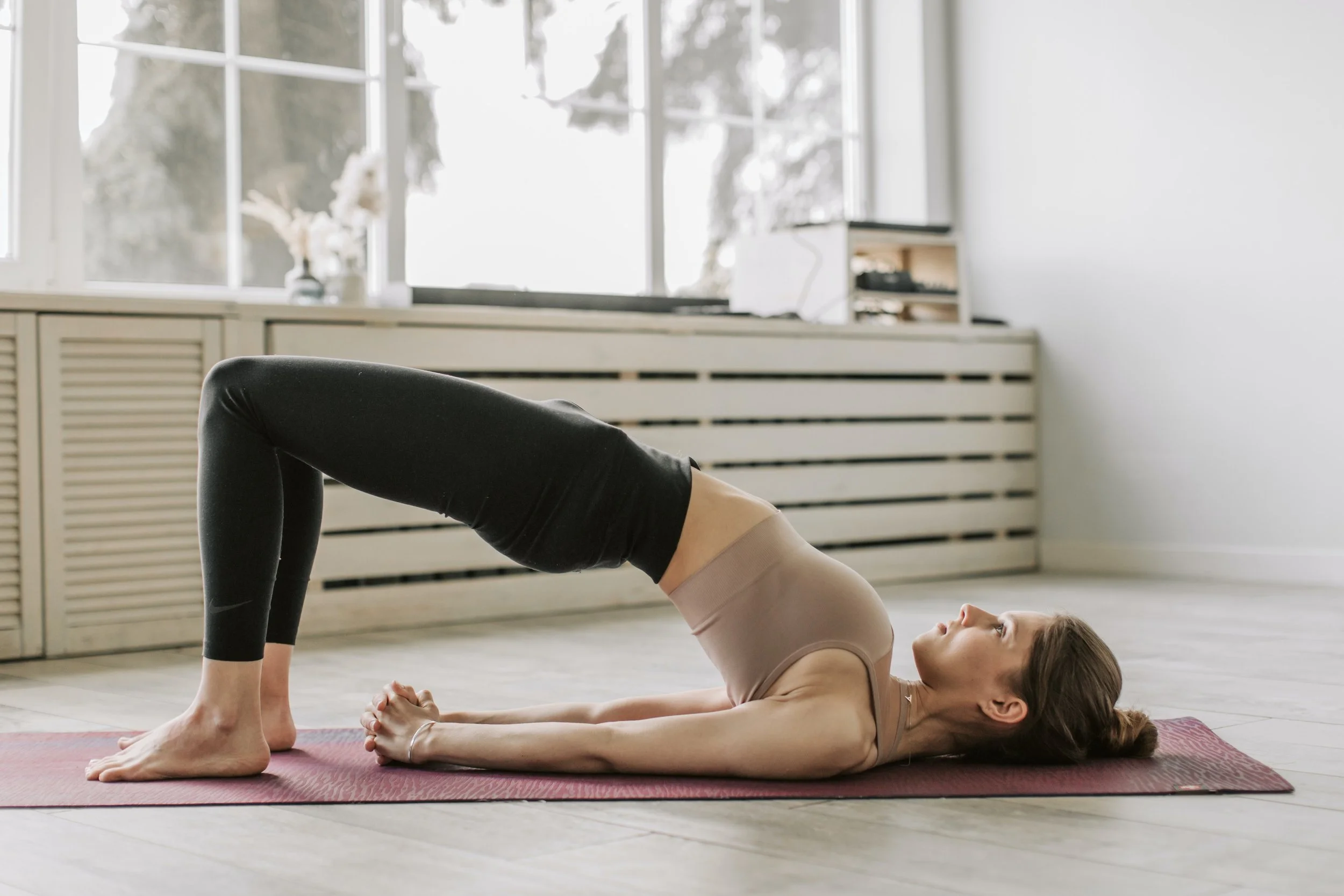
2. Glute Bridge
Your glutes play an important role in supporting the pelvis and lower body.
Building strength in this area can help the body share the work more effectively during movements such as walking, climbing stairs, and standing up.
How to do it
Lie on your back with your knees bent and your feet flat on the floor.
Allow your arms to rest comfortably beside you.
Take a breath in.
As you breathe out, gently engage your abdominal muscles and press through your feet to lift your hips away from the floor.
Pause briefly at the top without excessively arching your lower back.
Slowly lower your hips again.
Try 8 to 12 repetitions.
Why it can help
The glute bridge strengthens the muscles around the hips and buttocks while encouraging gentle core engagement.
Keep the movement controlled. You do not need to lift your hips particularly high to make the exercise effective.
3. Child's Pose Reach
This gentle stretch can help release tension through the back, hips, and sides of the body.
How to do it
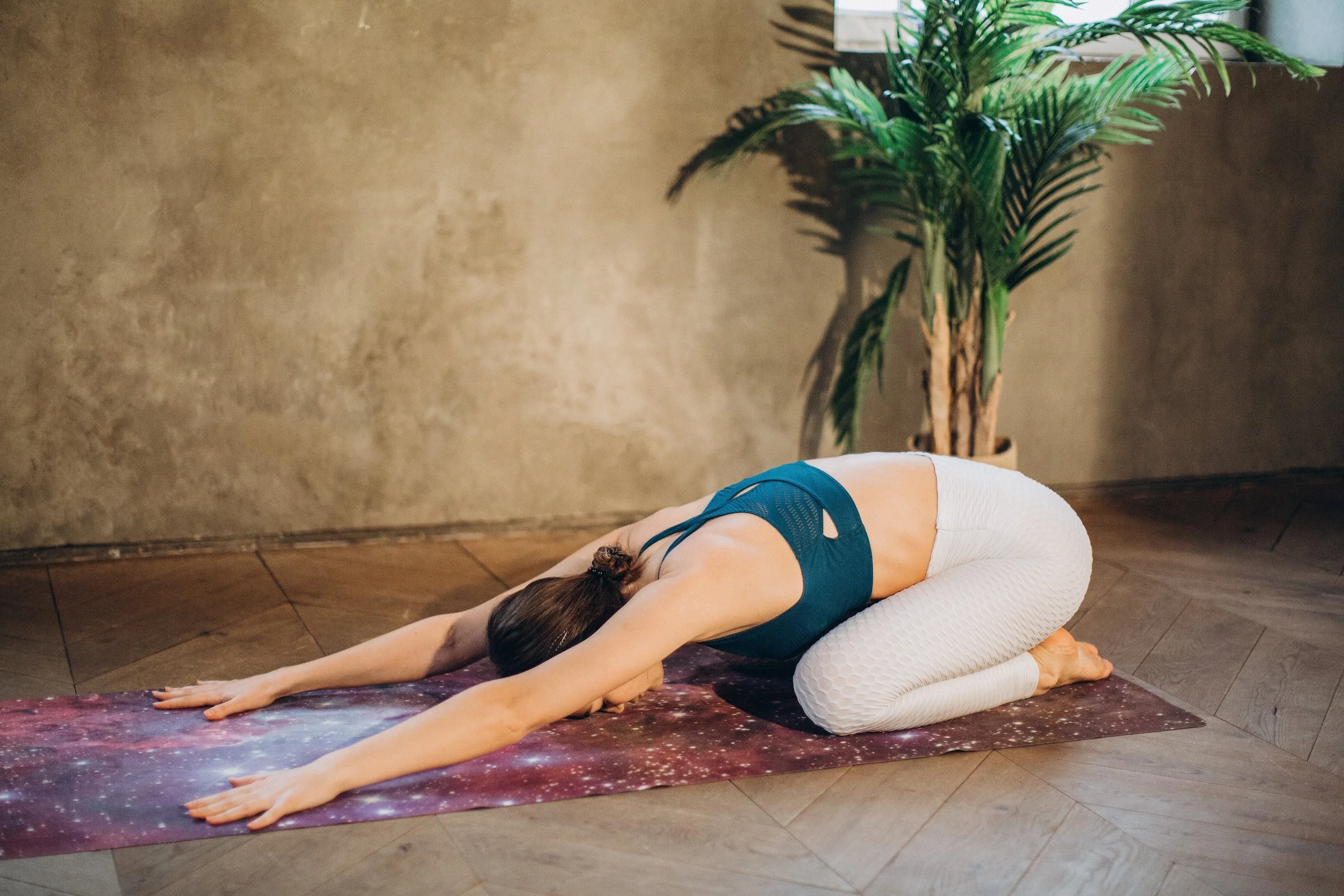
Begin on your hands and knees.
Slowly move your hips backwards towards your heels while reaching your arms forwards along the floor.
Only move as far as feels comfortable.
Take several slow breaths here.
For an additional stretch, gently walk both hands towards one side. You should feel a comfortable stretch along the opposite side of your back.
Return to the centre before repeating on the other side.
Why it can help
Child's pose encourages the back muscles to relax while gently creating length through the spine and surrounding muscles.
There is no need to force your hips towards your heels. Use the range of movement that feels right for your body.
4. Standing Roll Down
Anyone familiar with ballet inspired fitness may recognise this one.
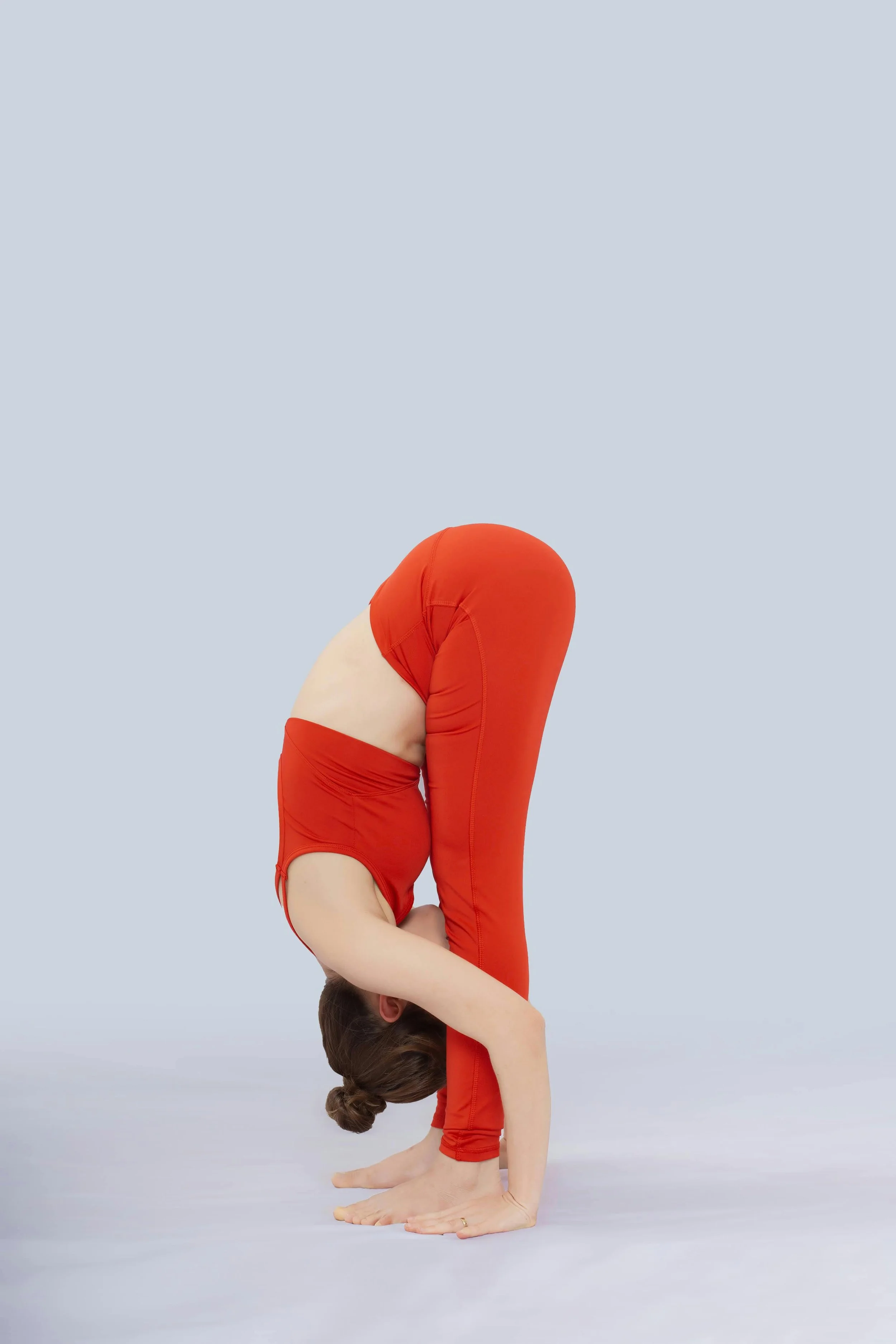
A slow standing roll down can help release tension through the back of the body while encouraging greater awareness of how the spine moves.
How to do it
Stand comfortably with your feet approximately hip width apart and your knees soft.
Take a breath in.
As you breathe out, gently lower your chin and begin rolling forwards through your spine.
Allow your arms and head to feel heavy.
Only travel as far as feels comfortable. You absolutely do not need to touch your toes.
Pause and take a relaxed breath.
Keep your knees soft and slowly return to standing.
Try 3 to 5 repetitions.
Why it can help
The movement gently mobilises the spine and stretches areas that can become tight after sitting.
The important part is control. Avoid bouncing or pulling yourself further into the stretch.
Your Breathing Matters Too
When something feels tight, it is tempting to tense the rest of the body in response.
Try to avoid holding your breath during these exercises.
Slow, comfortable breathing can help you move with less unnecessary tension. Exhaling during the more challenging part of a movement can also make it easier to maintain control.
None of these exercises should feel aggressive.
You are looking for comfortable movement, not the deepest possible stretch.
How Often Should You Do Them?
There is no need to complete a lengthy routine.
You might choose two or three exercises in the morning, during a break from your desk, or at the end of the day.
Regular, gentle movement is often more realistic than waiting until you have time for a long workout.
If you spend much of the day sitting, getting up and walking regularly can also help prevent stiffness from building in the first place.
What If an Exercise Makes Your Back Feel Worse?
Pain is not something you need to push through.
Stop an exercise if it causes new or worsening pain, particularly sharp, shooting, or severe pain. Avoid forcing stretches or repeatedly performing movements that aggravate your symptoms.
Lower back pain can have many different causes, and exercises that suit one person may not be appropriate for another.
If your pain is severe, persistent, follows an injury, or is accompanied by symptoms such as numbness, weakness, changes to bladder or bowel function, or pain travelling significantly into the legs, seek appropriate medical advice.
If you are unsure about exercising with an existing back problem, speak to your GP or a qualified physiotherapist.
Keep Your Back Moving
Looking after your back does not necessarily require complicated exercises.
Sometimes it starts with simply moving a little more often.
A gentle cat cow.
A few controlled glute bridges.
A comfortable stretch.
A slow roll down.
Practised regularly and without forcing your body, these simple movements can help reduce everyday stiffness, build supporting strength, and make movement feel more comfortable.
You do not need to push harder. You just need to keep moving.
We cover these exercises and more in many of our classes. Try Posture & Alignment and Sunday Stretch for feel-good, back-releasing classes.